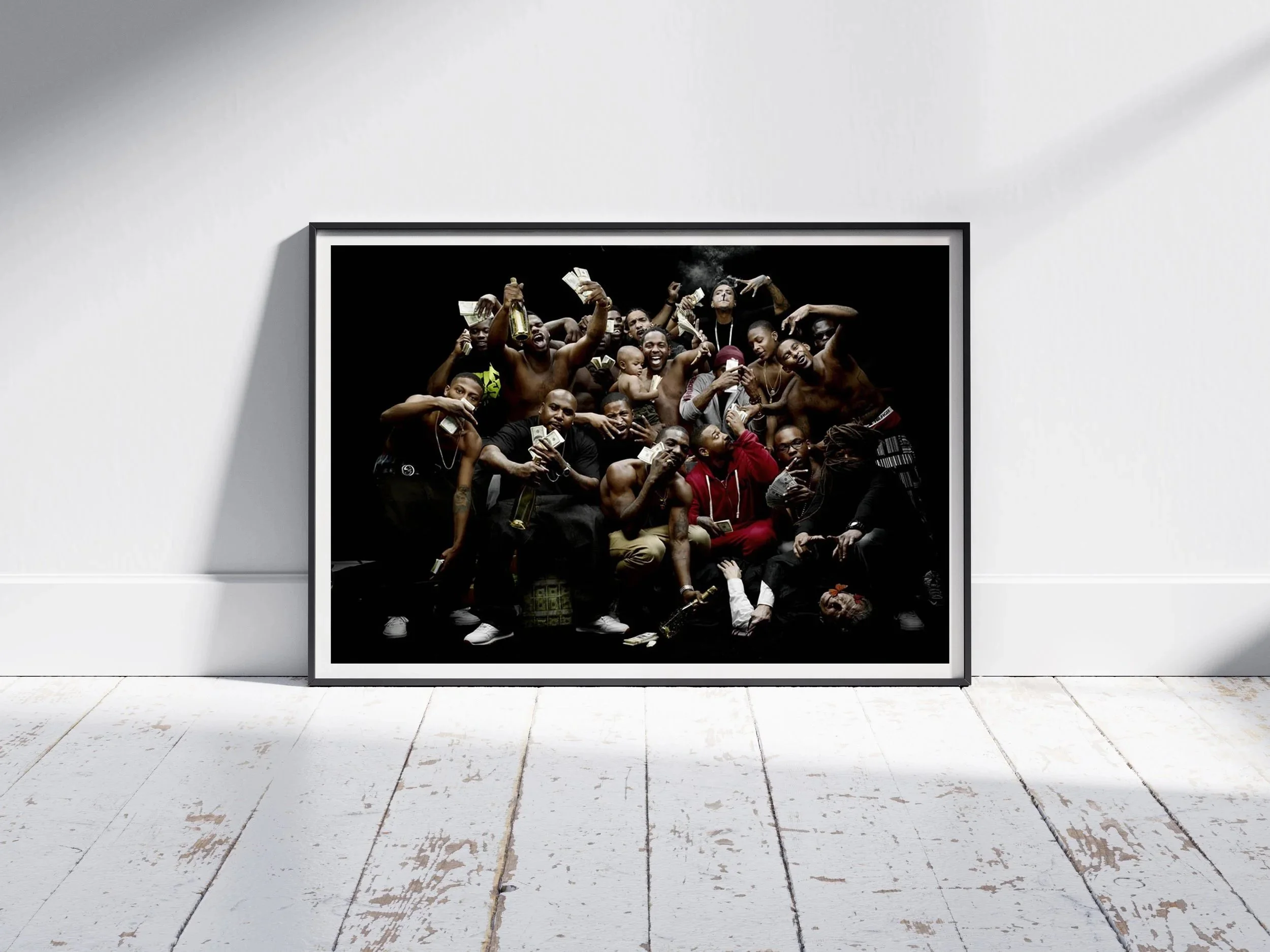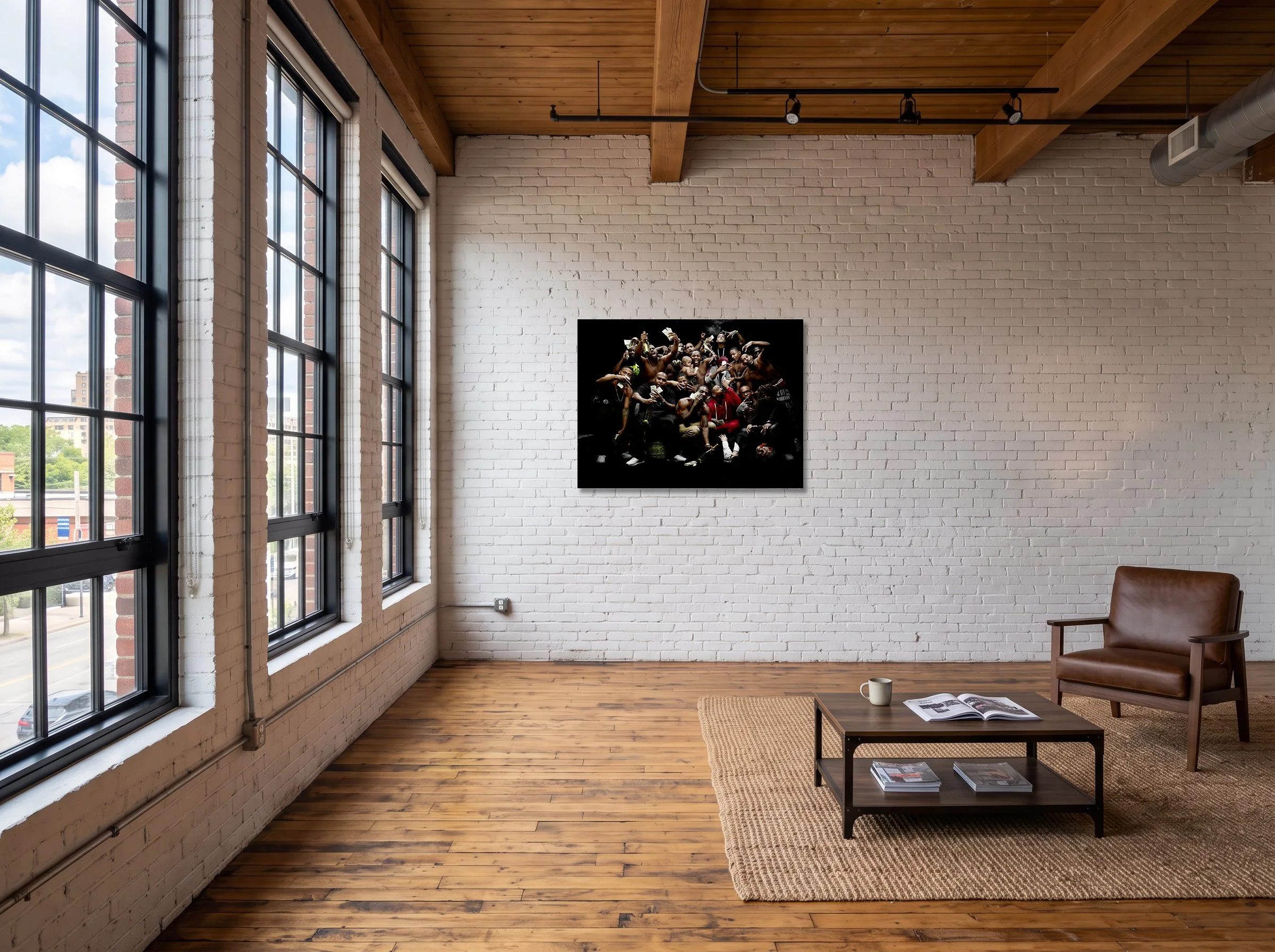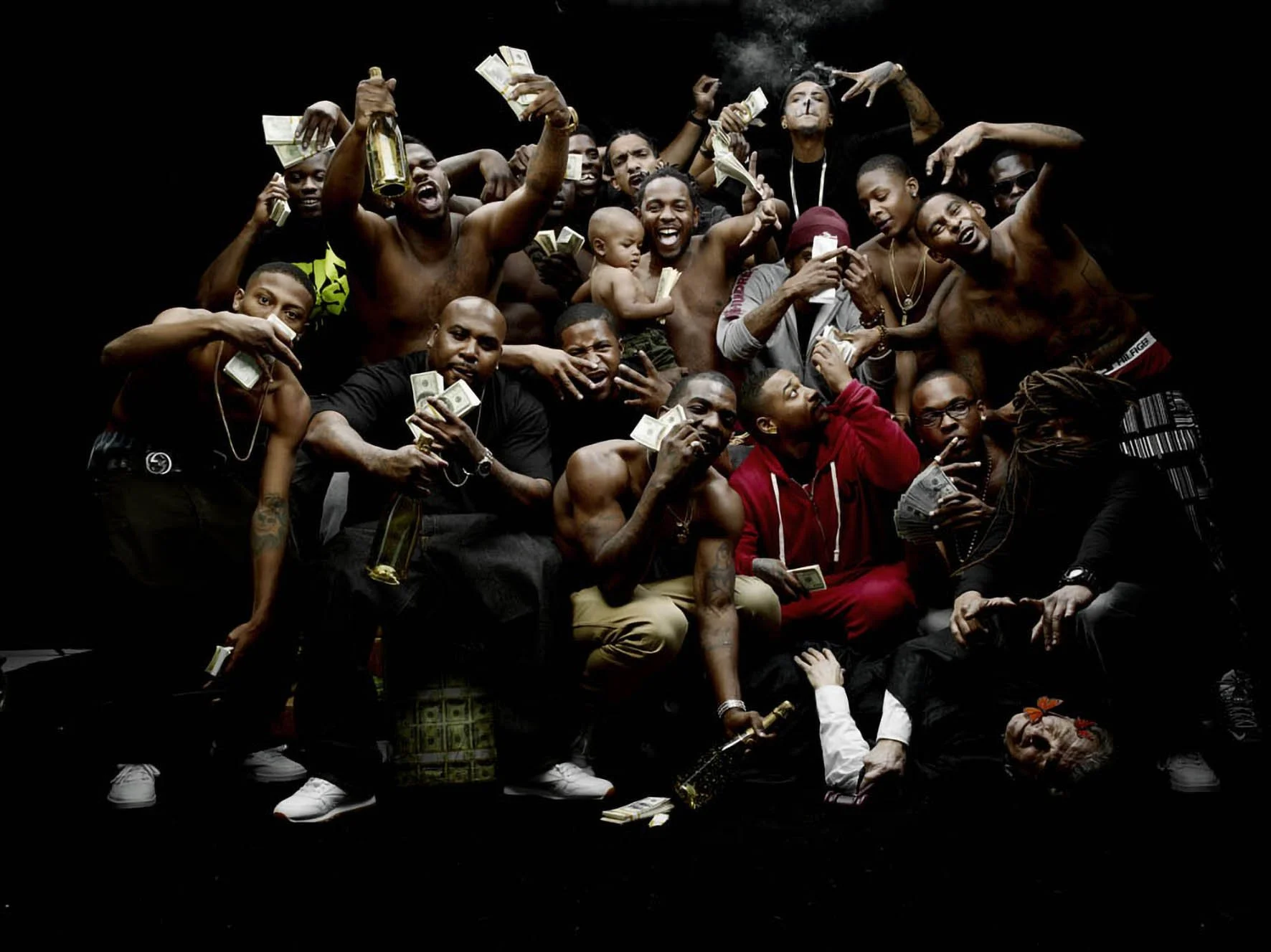
Kendrick Lamar - Los Angeles 2015
First edition, limited to 10 copies + 2 artist's proofs.
Details
- Titled, numbered, and hand-signed by the photographer
- Pigment ink print on Hahnemühle Fine Art Baryta 315 g paper
- Comes with a certificate of authenticity featuring a unique hologram guaranteeing the work’s authenticity and market value
- Original photograph of the album cover for “To Pimp A Butterfly.”
Sizes:
- 55 × 65 cm
- Larger sizes available upon request.
Price:
Contact the gallery
Photographer
Denis Rouvre is one of the world’s most renowned French portrait photographers. He began his career in 1988 in the photo department of the avant-garde cultural magazineGlobe. After going freelance, his images have been published in the most prestigious French and international publications: Le Monde, L’Équipe, Télérama, L’Express, Libération, Elle, GQ, Time, The Guardian, Der Spiegel, The New York Times Magazine…
A multi-award-winning photographer, Denis Rouvre has receivedthree World Press Photo awards, one Sony World Photography Award, and the title of Hasselblad Master 2012 in the Portrait category. He is the author of nine photography books. This acclaim has led him to photograph some of the world’s most prominent figures and exhibit his work in international galleries and institutions.
In his more personal work, Denis focuses on what he calls“heroic figures”: individuals confronted with power, fragility, resilience, and the pursuit of personal growth. It was this creative approach that reportedly prompted Kendrick Lamar’s management to contact Denis to shoot the cover photo for the album*To Pimp a Butterfly*—whichhas since become iconic.
Discover Denis Rouvre’s world of photography: www.rouvre.com
Denis Rouvre talks about his photo…
-
24 hours in Los Angeles with Kendrick Lamar, his friends coming and going, joints being passed around… it sounds crazy! How did this story come about?
It was a Wednesday. I was in Nice, working on a photo essay about the National Front for The New York Times Magazine. My phone rang, and I immediately recognized the U.S. area code. Calls from the U.S. always make me a little anxious: I’m not very comfortable speaking English, especially when it comes to understanding what people are saying to me.I ended up answering the call anyway. Someone told me about a record cover project for Kendrick Lamar. Since I was in the middle of working, I asked him to send me a message. I hung up, looked at my assistant Valentin, and said, “Do you know Kendrick Lamar?” That’s how the whole thing started.
They wanted to take the photo within two weeks. But I was booked solid for the entire following week, and very quickly, the only possible slot became clear: the following Saturday, three days later. We had to put the whole production together in record time. To be honest, I wasn’t even convinced that this commission was real. So there was no way I was going to put up a single cent. At the time, I had an agent in New York, Douglas, whom I’d never worked with before. I asked him to put the shoot together within that timeframe. And on Saturday, Valentin and I were on the plane.
Did you know in advance what kind of image you wanted to create, or did it all come together on the spot?
In our back-and-forth between Paris and Los Angeles, we’d agreed on a very understated look with a black background. But during the twelve-hour flight, the artistic direction had changed: they’d gone with a shot featuring the White House in the background. That made me a little angry, because I’m not used to working with that kind of setup.We arrived around 6 p.m. Los Angeles time. Between the trip and the jet lag, I was feeling a bit disoriented, and we had to jump right into the photo shoot. Contrary to what you might think, it wasn’t in Compton, but in an upscale neighborhood in Los Angeles. It was a massive photo studio that reminded me a bit of the Guggenheim: a gigantic sculpture at the entrance and entire racks of Profoto lighting equipment.
This photo radiates an insane energy where everything is overflowing: bodies, smiles, dollars, euphoria, champagne. How did you manage to handle this crew?
Inside, the music was blasting. There was a very strong smell of skunk, vodka bottles everywhere, and about 150 people there for the shoot. At the time, I wasn’t exactly at ease. There were three white guys in the studio: Valentin, me, and Douglas, whom I was meeting for the first time. I didn’t sense any animosity, but I didn’t feel any particular warmth toward me either. I had to find my place.Normally, I would have cut off the sound and taken control of the situation, just to make it clear who was running the session. The thought briefly crossed my mind. But in this case, I chose to go along with the sound—and, above all, to go along with them.
Despite the change in artistic direction, I was trying to take the photo I had in mind. I wanted Kendrick facing me, looking straight into the camera, powerful, at the center of the group. I wanted him to be the energy that brought the others together. But I immediately sensed that he wasn’t trying to steal the spotlight. Above all, he wanted to pay tribute to his friends, to showcase his team, even if it meant stepping back a little. I had to balance these two desires.
There were counterfeit bills and fake bottles of champagne, but the joints were all real. They also needed someone to play the role of the Supreme Court justice. So it was Douglas who ended up lying on the floor, trampled by the group.
And I started shooting. I tried to bring some order to the chaos, without really having much control over anything. I had to deal with whatever was happening in front of me and, above all, get the shots. I yelled a lot. I don’t think anyone understood what I was saying, but at the same time, it worked.
At the exact moment you press the shutter button, what’s the atmosphere like?
My memories are pretty vague. It was a moment of energy, confusion too, and magic. Everyone was there to shoot the cover for Kendrick Lamar, and everyone was playing their own part. I didn’t know his music or his world, and within a few hours, I found myself immersed in it all.A few hours later, everyone had left. I asked a guy who was still there for some weed so I could smoke a joint and relax. The exact opposite happened: I couldn't even sleep for two hours.
The next day, we caught our flight at noon. Twelve hours later, we were in Paris. Even today, it still feels like that photo shoot was a dream.
Looking back, what strikes you most about this photo today?
I never imagined what this album would become. Looking back, I think the album’s success and the Grammy Awards also changed the way people view this photo. It has become inseparable from the music it accompanies. That’s also what gave it its power.